Tag: sustainable delivery

  • Building scalable locker networks for 2025 and beyond

    Building scalable locker networks for 2025 and beyond

    As the demand for efficient last-mile delivery grows, scalable locker networks are stepping into the spotlight as a sustainable solution. But, building these networks isn’t just about installing lockers—it’s about creating infrastructure that adapts to evolving consumer needs, changing regulations, retail strategies, and technological advancements. 

    So, how do network builders future-proof their locker systems for the challenges and opportunities of 2025 and beyond?

    The evolving role of locker networks

    Locker networks have come a long way from being simple parcel drop-off points. Today, they are dynamic nodes in the logistics chain, capable of supporting various services like click-and-collect, returns, and even local marketplaces. They don’t just store parcels—they enable smarter logistics and stronger customer connections.

    Modern locker networks need to:

    • Handle diverse carrier needs: Multi-carrier locker solutions ensure that no compartment sits empty,  maximising the value of every square inch.
    • Adapt to retailer priorities: Retailers can prioritise their own webstore orders while still managing additional courier volumes.
    • Support innovative services: Think beyond parcels—from package-free delivery to lockers serving as hubs for community exchanges.


    By embracing these capabilities, lockers become more than logistics tools—they transform into strategic assets that drive growth, efficiency, and sustainability.

    Challenges in scaling locker networks

    Scaling a locker network isn’t as simple as it seems. It’s a balancing act requiring careful planning to overcome hurdles like these:

    Infrastructure hurdles: Many locker networks rely on proprietary hardware, limiting flexibility and future scalability. This can box networks into outdated solutions and reduce room for innovation.

    Capacity optimisation: Half-empty lockers are a common sight, often because systems lack the intelligence to allocate space efficiently. Empty compartments mean wasted opportunities and inefficiencies.

    Cost pressures: Installation costs are only the beginning. Without the right technology, operational expenses can escalate quickly, eating into potential ROI.

    Environmental impact: Inefficient routes and poor utilisation of lockers contribute to unnecessary emissions. As sustainability becomes a non-negotiable priority, these inefficiencies can no longer be ignored.

    The good news? These challenges aren’t insurmountable. With the right tools and mindset, they can become opportunities to innovate and build smarter, future-proof networks.

    The foundation of future-proof networks

    So, how can you build a locker network that’s ready for whatever the future holds?

    • Start with the right technology: The locker market is shifting toward greater collaboration, with networks increasingly sharing infrastructure. This consolidation isn’t just about physical lockers; it’s driven by technology. Flexible software that supports shared use, adapts to evolving business models, and integrates seamlessly with existing systems is essential for staying ahead.
    • Go agnostic: Building flexibility into your network starts with choosing hardware-agnostic software. Smartmile’s technology supports seamless integration and future upgrades, ensuring your network is always ready to adapt. Read more about our approach.
    • Think beyond parcels: Lockers can be hubs for returns, C2C exchanges, and even sustainable delivery models like package-free services.
    • Smarter capacity management: Avoid idle compartments by allocating them intelligently. The goal? Full lockers, fewer trips, and happier customers.
    • Sustainability first: Small design tweaks, like optimised routes and shared-use lockers, can have a significant environmental impact.


    By focusing on these pillars, scalable locker networks can evolve into solutions that meet both business needs and sustainability goals.

    What’s next?

    The future of locker networks lies in their ability to adapt, collaborate, and innovate. These networks will need to be deeply integrated into everyday life, serving as dynamic hubs for both businesses and consumers. Collaboration—between retailers, couriers, and even competitors—will be key to creating shared systems that work for everyone.

    At Smartmile, we believe scaling locker networks isn’t just about adding more lockers. It’s about rethinking what’s possible, building smarter connections, and designing solutions that evolve with the world around them.

    As 2025 approaches, the real question isn’t whether locker networks will grow—it’s how they’ll grow smarter and more efficiently.

    Stay ahead in the locker game

    Looking for innovative ways to build and scale locker networks? Follow us on LinkedIn for the latest updates and ideas!

  • Why choose Smartmile for last-mile delivery

    Why choose Smartmile for last-mile delivery

    As your brand grows, choosing the right partner for locker logistics becomes critical. At Smartmile, we don’t just provide lockers and technology solutions—we offer an entire ecosystem designed to optimize your last-mile logistics, boost customer satisfaction, and improve profitability. Our approach is built on collaboration and innovation, ensuring your business can adapt to evolving market demands.

    Seamless integration without the headaches

    Handling multiple couriers and managing different systems can feel overwhelming. Smartmile simplifies this by providing a platform that connects and adapts to any logistics partner, enabling you to streamline operations and maintain full transparency. Whether you’re managing multiple locker networks or integrating various couriers, we ensure that your locker delivery process runs smoothly.

    By focusing on reducing operational friction, Smartmile empowers you to keep your attention on your customers while we manage the complexities behind the scenes.

    Elevate your brand with every delivery

    Customer experience doesn’t end when a purchase is made—it extends to that final touchpoint when the package arrives. With Smartmile, you have the power to shape this moment and guide consumers along the way to it. Personalized notifications, branded pickup points, and seamless returns turn each delivery into a brand-building moment.

    Branded notifications and lockers: Your brand remains present throughout the delivery process, reinforcing your identity at every touchpoint.

    Smooth returns: Create an effortless return experience, allowing customers to feel confident about their purchase decisions and their ability to interact with your brand smoothly.

    Playground for innovation: You get the easy tech to design unique locker experiences to boost your service level or brand image. Imagine compartments for recyclable material collection, a C2C return marketplace to keep returns local, or a give away launch and more. 

    By owning the entire customer journey, you’re not just delivering packages—you’re delivering a lasting impression.

    Collaboration at the core

    One of Smartmile’s key strengths is our platform’s flexibility. We work with any courier, allowing you to partner with multiple logistics providers while avoiding restrictive agreements. This enables you to optimize locker space, reduce costs, and improve overall efficiency.

    Our agnostic system encourages collaboration among partners, streamlining communication and reducing potential delays in the delivery chain. By building a network that adapts to your needs, we ensure that your last-mile logistics become an asset, not a burden.

    Designed for tomorrow’s growth

    At Smartmile, we don’t just focus on the present—we future-proof your logistics to grow with your business. Our flexible solutions are designed to adapt to your needs, whether you’re managing local deliveries or scaling operations to reach new markets.

    We help you stay ahead by offering technology that evolves with your business and the demands of your customers. Our platform enables:

    • Scalable solutions: Our technology grows with your business, ensuring that you can handle increasing demand without missing a beat.
    • Sustainability at the forefront: Centralize services, reduce emissions, and share resources through our platform’s ability to support multiple couriers and local retail, making your logistics greener and more efficient.
    • Adaptability: Designed to fit businesses of any size, our technology allows you to meet the evolving expectations of both your customers and the market.

    Unlocking efficiency and profitability

    Efficiency and profitability are at the heart of Smartmile’s platform. We know that managing logistics can be expensive, but with the right systems in place, it doesn’t have to be.

    By integrating Smartmile into your operations, you can:

    • Lower costs: Shared lockers are more efficient than home deliveries, reducing operational costs and saving you money.
    • Increase profitability: When you own your locker network, you can charge logistics partners for the capacity they use—turning what was once a cost into a profit stream.

    Let’s redefine last-mile delivery

    At Smartmile, we see the last mile as more than just the final step in the delivery process—it’s a strategic opportunity to reinforce your brand, enhance customer loyalty, and increase operational efficiency.

    We’re not just your logistics provider—we’re your partner in transforming how you approach last-mile delivery, ensuring that every interaction strengthens your brand. From seamless integration to scalable solutions, Smartmile empowers your business to grow while delivering the best possible experience to your customers.

    Are you ready to take the next step in building the future of last-mile delivery? Let’s talk and explore how we can help your brand thrive in an increasingly competitive market.

    Follow our journey!

    Stay updated on the latest developments in last-mile delivery. Follow us on LinkedIn for insights, industry news, and innovative ideas, or browse our past blog posts to learn more.

  • Brainstorm how to build the optimal locker capacity feature.

    Brainstorm how to build the optimal locker capacity feature.

    In times when new technologies such as self-learning optimization software and AI are leading innovation, we wonder how we could use similar intelligence to transform our industry—especially seeing that while Lockers are great for future-proof OOH delivery, they have challenges of their own. Lockers have limited space, and especially shared lockers are unpredictable. As a result, couriers cope with parcel overflow, which causes inefficient re-routing of parcels, resulting in higher CO2 emissions and increased costs. For customers, full lockers are also frustrating. Space for in-door lockers is also not endless. We have to look at how we can optimize the locker space and use each compartment best. It got our R&D heads spinning; could we expand our software with an intelligent locker capacity feature?

    In this article, you get a glimpse into our thought process. A well-thought-out reservation feature that maintains the agnostic nature of the system can lead to a future of truly smart capacity optimization.

    The base for a locker capacity feature lies in empowering smart capacity booking

    Let’s start our brainstorming from a simple base: What if we developed the ability to reserve compartments? One of the biggest advantages of reserving is the ability to plan what to deliver. By allowing couriers to announce their parcels ahead of time and reserve part of the locker space, they know exactly which parcels to take where before departing from sorting centers. By securing reservations, we can prevent instances of overflow. This means fewer instances where parcels need to be redirected to different locations, thus streamlining the entire delivery process.

    Moreover, when we use lockers efficiently through the capacity reservation, it can prevent out-of-route kilometres. Couriers can plan their deliveries with certainty, ensuring that they do not waste time and resources on unnecessary detours. This optimized route planning reduces the carbon footprint of the entire delivery process, leading to lower CO2 emissions and a positive impact on the environment.

    How to maintain the agnostic nature of a locker when developing a locker capacity feature

    For agnostic parcel lockers, maintaining their neutral nature is the most important. In developing a reservation feature for agnostic lockers, we have to make sure that it does not compromise the shared nature of the system and treats all connected partners fairly. Here are some key considerations for our design brainstorm.

    1. The reservation feature should follow industry standards to ensure compatibility with all major courier services.
    2. The announcements of parcel loads should be timed fairly, or we should realize a type of split within the system set to a maximum amount of compartments reservable per operator.

    By following widely accepted protocols and levelling / partly restricting reservation freedom, we can protect the agnostic nature of the lockers, allowing seamless integration with diverse courier networks.

    What else?

    1. Data security, of course. The software should have the ability to set up clear data separation and a locker space split. Not only to uphold GDPR standards but also to ensure innovations in retail or sustainability can continue to be part of the locker ecosystem. In a way, we have to allocate a suitable amount of space and compartments per service or feature.
    2. The reservation feature should be designed to accommodate future advancements in technology and capacity optimization. A scalable and adaptable design ensures that the system remains relevant and functional as the delivery landscape evolves.

    Last of all, what about consumers? If all compartments are reserved and thus blocked for use, customer experience plummets.

    1. Compartments reserved yet empty should be categorized per courier company. The empty compartments should remain accessible for customers’ returns or shipments. Reservations should also be kept for only a limited amount of time.

    With the base considered, let’s add a dash of innovation.

    The integration of capacity reservation in agnostic lockers is just the beginning of our journey toward smarter capacity optimization. As the technology evolves, our R&D heads are already spinning up a 2.0 version of our capacity feature that considers various factors for an even better ecosystem. What could we have our system learn and track to optimize itself over time?

    1. Predicting consumer behavioural patterns: Setting up advanced machine learning algorithms to analyze consumer behaviour and predict peak usage times. By understanding when lockers are most likely used, the system can allocate capacity accordingly, reducing the risk of overflow. It could also send timely suggestions for a better split of reservation requests. 
    2. Inter-ecosystem communication. Instead of looking at locations in isolation, we should approach capacity management as a network tool. Having locations share capacity updates dynamically. The system could come up with alternative distributions of parcels to create the optimal level of capacity guarantee. These suggestions could incorporate consumer feedback either given in advance at check out or requested in real-time.  
    3. Courier schedules: Integrating real-time courier schedules enables the system to optimize the delivery routes based on courier availability and workload, further streamlining the delivery process.
    4. Integrating traffic updates and route planning: Incorporating live traffic updates and intelligent route planning can help couriers avoid congested areas, reducing delivery time and CO2 emissions.
    5. Weather forecasting: Imagine we could protect our customers from biking through the rain. Systems could suggest the best time frame to pick up parcels with the lowest chance of needing an umbrella.
    6. Overselling capacity especially optimized around the peak season: A truly smart capacity optimization system can ideally oversell capacity based on historical usage patterns and predictive models. This approach minimizes instances of unused capacity and maximizes locker utilization, benefiting both courier companies and locker operators. Especially during the peak season, we have to use our machines the best we can.

    Will it be worth it? Benefits of launching capacity reservation or optimization features across an ecosystem of agnostic lockers

    Having a network of agnostic lockers across a city, all utilizing the same technology and capacity reservation feature, offers huge advantages:

    Seamless capacity sharing: A network is stronger when connected. With capacity data sharing among lockers, an overflowing locker can automatically suggest forwarding overflow to nearby lockers within the ecosystem. This ensures that no parcels are left stranded, providing an unmatched reliable service.

    Resource optimization: Shared data enables better resource management, allowing locker operators to allocate resources efficiently and cater to varying demands in different areas, for example, retail solutions. 

    Optimal revenue potential: By implementing capacity intelligence across a network, the network can reach its highest capacity potential, and so increase the revenue of network operators. 

    Enhanced user experience: There is nothing more frustrating than having your parcel re-routed to an inconvenient location or postponed for delivery. If we part-eliminate these events and, where impossible to eliminate, notify the customer in time, maybe even ask for their preferred re-direction location, we can achieve unmet customer satisfaction, encouraging more consumers to use these smart lockers for their deliveries.

    All in all, with the proper consideration, a deep understanding of how locker networks work and are used, and a dash of tech brilliance, we could build a better ecosystem.

    Do you have some final words? Well… yea

    Developing a locker capacity feature in agnostic parcel lockers is the next best step towards smarter capacity optimization in last-mile delivery. It pushes beyond the boundaries of lockers (something we love doing at Smartmile). By reducing parcel overflow, re-routing, and CO2 emissions, the reservation feature could bring undeniable benefits to courier companies, consumers, and the environment.

    We are thrilled to share that we have secretly started on this journey. But this is, of course, incredibly secret stuff;). Learning lots from our Courier partners, we started out developing unique system capabilities for our secret sauce. With this article, you get a glimpse of what is going on inside our magic minds.

    Let’s join forces and embrace the power of modern technology, break free from the constraints of the past, and create a future where delivery is a true asset to us all.  Follow our updates on Linkedin or read our past blog posts to bridge the time!

  • How to turn parcel machines into ecosystems connecting the last mile

    How to turn parcel machines into ecosystems connecting the last mile

    Before diving into how we turn parcel machines into ecosystems, we would like to start off with a quote.

    A wise wizard once told the creatives from Smartmile:

    “We are only as strong as we are united and as weak as we are divided.”

    – Albus Dumbledore

     (Yep, some of our members quote him daily)

    Even though these are words by a fictional character with no concrete standing in the last mile, they hold a wicked truth. 

    The last mile includes several stakeholders worldwide: multiple courier companies, locker networks, local retailers, online stores, and billions of e-shoppers. They all make choices that affect the last mile and its footprint, inefficiency and costs. But don’t worry; all stakeholders also hold a part of the solution.  

    At Smartmile, we share one core belief: because so many stakeholders are involved in the last mile, we can only change it by getting every stakeholder to connect in a shared solution. 

    Our founders: Aku, master of the parcel lockers, and Steffen, king of software, combined their strengths, found a team, and set out to build the first neutral basis for the last mile. Turning parcel machines into ecosystems with software to integrate any last mile stakeholder worldwide and make it easy for them to collaborate.

    How did we create this core technology? What makes it such a tricky business? And what will we do next?

    Step 1: The magic of turning any parcel machines into ecosystems— our hardware-independent software platform.

    At the core, we are sustainable and made this mindset part of our solution design. When we developed our software, we wanted to ensure we could work with local machine suppliers across the globe, sourcing our hardware with minimal footprint while overcoming supply chain challenges. 

    Our team created an “abstraction layer” that takes the essential software running on any parcel machine, all machine software setups being inherently different, and abstract it to run our software without any problem.

    This means we can run our full technology on any machine provider and all their machine types, from small indoor (wooden) lockers to huge, fully automated robotic devices.

    Little did we know, there are even more upsides to hardware independence. Imagine expanding by 100 machines in two months; finding a supplier with the same amount of machine stock readily available can take time. This level of agility, however, was a must for us. By working with any machine supplier, we get to minimize dependency on single players and find the best machines or combinations of machines to get the job done. 

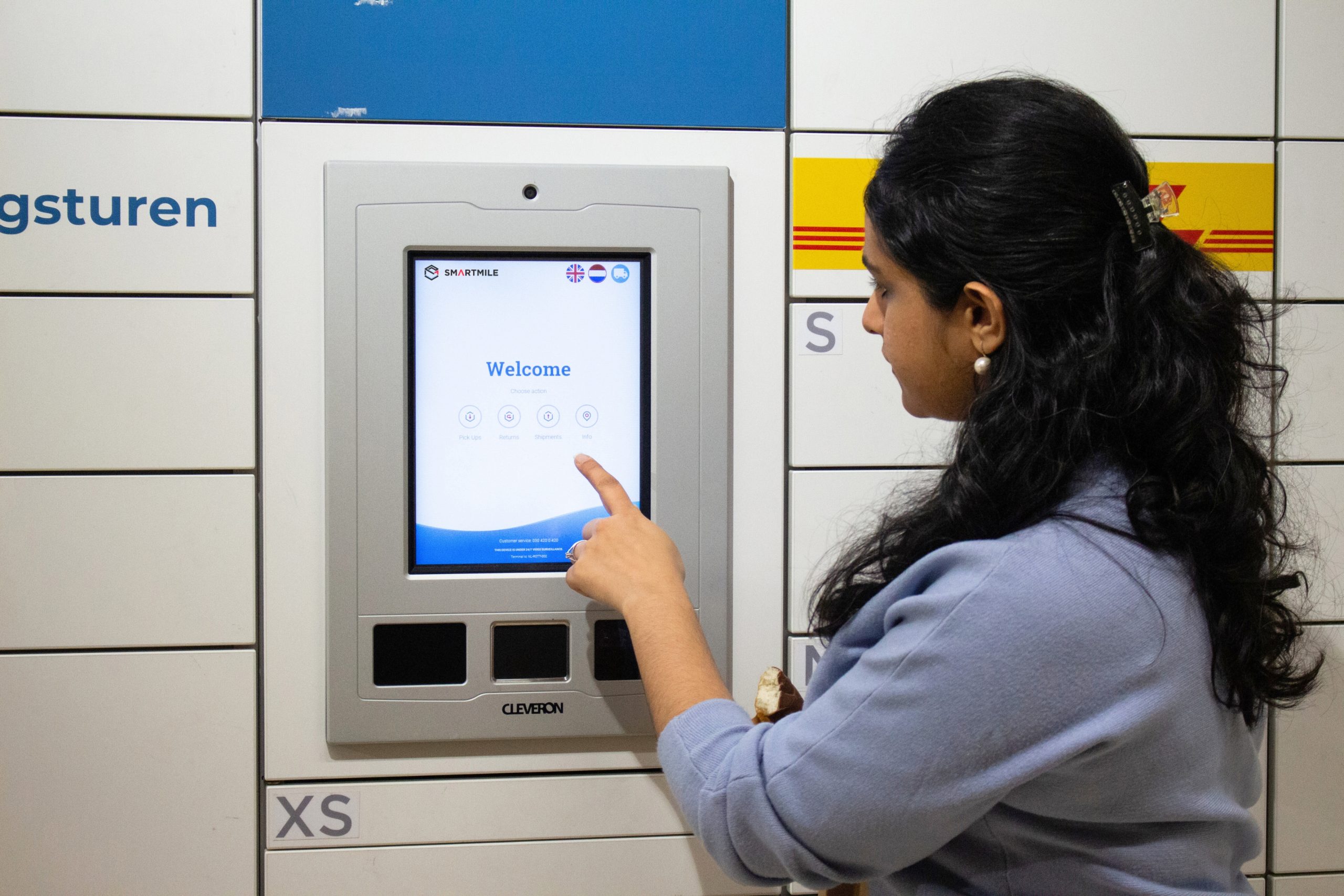
    There is a third advantage to hardware independence laying at the heart of our customer experience. We mix and match machine types across our ecosystems, but by launching the same system on all of them, we create the same user experience and integrations anywhere. If any parcel machine worldwide had the same user interface and easy experience, customers would only have to get used to one way of navigating parcel machines instead of making customers deal with numerous different ways of operating.  

    More recently, we have been exploring the potential in being able to run our software on existing networks. 

    With hardware independence, how any network worldwide is built up becomes almost irrelevant. We can abstract the hardware and run our software easily.

    Welcoming new providers to our machine portfolio takes approximately a day, depending on the readiness of the partner technology and documentation. So far, we have integrated eleven manufacturers and fifteen different machine models.

    Step 2: Chameleon powers activate to integrate any courier, retailer, or impact partner. We all have great solutions to combine.

    To turn parcel machines into ecosystems with connected stakeholders getting a hold of the footprint and flows across the industry, our lockers must be able to connect any system—the core challenge in solving the last mile. Any courier system, e-commerce setup, or retail system is different because there are a million roads leading to the Rome we call software development. 

    We, as creatives, like to describe our system as a magical chameleon or a superhero translator able to understand any accent, language, or slang you throw at it and communicate back with ready-made, multi-language responses. We talked it over with Fabian, and this creative description is close to the truth. 

    Our system can abstract partner systems and distill the required information set to create a flexible communications bridge. Because of the abstraction, it does not matter which system or language any partner tools run. By being this flexible in understanding and communicating, any collaboration or function between our’s and our partner’s systems is possible.

    We are pretty thrilled we get to keep our magical chameleon metaphor and even more thrilled to find out that this chameleon cannot only talk to any system, but Fabian and the team also equipped it with a special toolbelt. This toolbelt comprises a template language and a low- to no-code development flow. In short, building integrations for our team is almost as easy as playing Tetris.

    To build a new integration, we first meet with our partners, discuss how to exchange data best, establish system communication, and determine the user flows and functionalities to offer. We simply have to configure templated actions, events and triggers through this toolbelt. After that, we roll out a pilot on a set of hubs or a smaller area. Once the pilot runs smoothly, we push it nationally or internationally. 

    Because of the Smartmile system, creativity is limitless; our partner ecosystem can design any service just like a chameleon, changing to any necessary colour pattern to fit into its environment.

    Step 3: How we make designing new services easy.

    Building new services can be a part of integrations, so we made it easy and low-code. We can add new service flows to any of our integrations. Communication between systems is already established, and our templated low- to no-code approach  makes creative service design barrier-free. 

    It is, again, only a matter of configuring the right pre-templated actions, triggers, and events. For example, couriers loading parcels, customers picking up, scanning return labels, or logging in using QR codes.

    But we can also realize more innovative services through our parcel lockers, such as opening compartments for collecting donations, exchanging products directly between a local retailer and a customer, returning reusable packaging, building a locker-based marketplace, and more.

    Any of these types of services comes down to a configuration, and all required parts are templates available in the toolbelt of our chameleon. By making development this easy, we lower the barrier of expansion and competition for smaller market participants. Smaller players can innovate based on our existing ecosystem which could be the starting point for their scaling to national or international success without having to pre-invest in the whole infrastructure. So in a way, we minimize development time by mostly configuring to change the world.

    Step 4: How the Smartmile ecosystem connects the last mile and prepares it for the EU-wide Corporate Sustainability Reporting Directive (CSRD).

    The last mile, as it is, is the most costly and high-emission part of delivery and e-commerce. We establish a direct connection between last-mile stakeholders and invite them to collaborate. Design new services as one system, which will be a lot more effective at changing the industry as a whole; a direct first step to report on. Our network allows partners to impact the footprint of the last mile and to serve communities surrounding the machines.

    Today is not the time to continue siloed thinking but to introduce platform thinking in e-commerce and delivery. That is why we have the technology to realize a delivery ecosystem where any partner process can allign with other stakeholders. We can get a hold of the industry and make the process enjoyable and efficient.

    – Smartmile Founders

    We designed our tools and system with the lowest possible technological barrier to ensure partners can create new services and re-think their processes regardless of size. Experimenting and developing new services together does not require huge budgets, lots of time or extensive technological knowledge with Smartmile at the core. 

    Our ability to lower development barriers spans different complexity levels, from the simple web-form-based integration to the large-scale national use case with e-commerce, SAP, warehouse automation and automated fulfillment integration for devices with serial number tracking capabilities. We have already built these types of setups and made them accessible.

    Our system makes building new ways of running last-mile processes easy to implement. This ease of design also means we can offer connected partners a platform to collaborate and, most importantly, experiment. 

    Not one of us knows what exactly has to change to make the last mile footprint-free but to get closer to understanding this and reporting on the progress; we have to be able to experiment and collaborate risk-free—implementing platform thinking and knowledge sharing at the core of changing the last mile. Imagine if we would connect the world through Smartmile technology and put all of our brilliant ideas together in one ecosystem.
    What a magical world that would be.

    Step 5: How can we turn parcel machines into ecosystems securely across the globe.

    We are nearing the end of our deep dive into the magical world of Smartmile technology. As one beautiful end note, we wanted to shine some light on how we manage to turn parcel machines into ecosystems worldwide because, you guessed it, we planned for scaling from the start. To quote our wizard Fabian:

    “We developed the Smartmile technology with scalability as a core pillar from day one,”

    – Fabian Head of R&D at Smartmile

    meaning that from our architecture through to how we expand our functionalities, we developed all to scale. On top of that, we are in the process of getting our ISO-27001 certification to ensure our systems adhere to the highest security standards.

    Step 6: What is next for Smartmile?

    We hope you had a great journey through the magical world of our technology. New spells are constantly in the works to push the boundaries of our Hubs further. To prove it, we already have four Patents pending combining machine functionality, user verification, capacity optimization, repurposing returns and more.   All from that same magical set of minds: our Tech herd. 

    Writing this piece, we uncovered that while technology can feel like novel-inspired magic, it is actually magic that exists in the real world. Our technology is a concrete and powerful part of our company and essential in changing the last mile. 

    For now, we part ways, but stay tuned to learn more, and check out our LinkedIn for the upcoming in-depth interviews with Fabian! We sure are excited to share them with you. For more post, head back to our Blog.