Tag: Last mile

  • The Power of Agnostic Parcel Lockers and Smart Software

    The Power of Agnostic Parcel Lockers and Smart Software

    E-commerce has experienced insane growth, and this trend shows no signs of slowing down. Yet, with the boost in e-commerce comes the challenge of handling a truckload of packages. As a result, the traditional last-mile delivery system, involving delivery vans and couriers, has been strained to its limits. In major European cities, congested traffic, parking difficulties, and strict environmental regulations further complicate the timely delivery of packages and the current method of doing so. Cutting to the chase, the traditional way we deliver cannot continue as is. Luckily, new innovations such as agnostic parcel lockers made it to market. But what makes them succeed?

    Delivery Efficiency through Agnostic Parcel Lockers

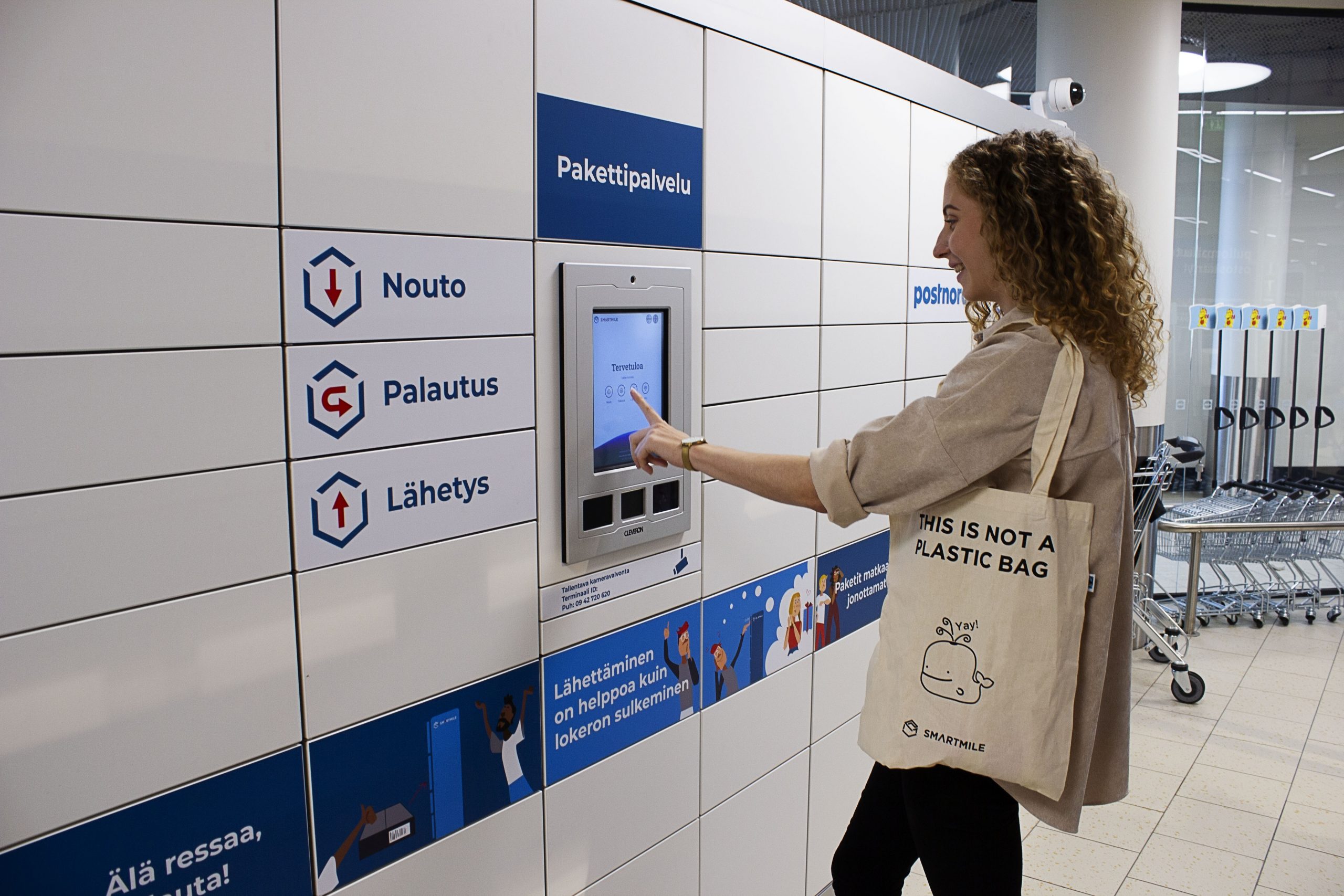
    Agnostic parcel lockers entered the stage as an effective solution to optimize the last-mile delivery process in Europe. Lockers are designed to accept parcels from any courier, irrespective of the courier company. Their versatility and accessibility (aka 24/7) make them a practical alternative to traditional delivery methods, especially in urban areas with high population densities.

    The key advantage of agnostic parcel lockers is their ability to integrate multiple couriers into a single delivery point. With a unified platform, customers can receive packages from different e-commerce platforms and courier services in a single locker. This integration streamlines the delivery process, reducing the number of stops for delivery personnel and minimizing overall delivery time. The logic is simple: four orders could either be four visits to different PUDOs or just one to an agnostic locker. Agnostic lockers respect our complex lives, understanding that we have better things to do than wait around for our parcels to arrive. Placed at convenient spots like grocery stores and malls, these metal or wood wonders make your package pickup a smooth part of your shopping spree. Especially in mature markets, like Finland, where lockers are “normal,” customers prefer picking up everything at one location. To them, it does not matter whether there is an agnostic locker nearby or a PUDO that accepts multiple courier parcels. What matters is convenience, control and, for some, the environment. We expect that with increasing consumer awareness, similar behaviour will show across the globe.

    Lastly, and one of the reasons why we focus our software platform on limitless integration, truly agnostic parcel lockers can optimize delivery routes and minimize failed attempts, cutting costs for courier companies, especially if we develop technology to push the capacity of lockers. Fewer delivery trucks on the road mean a smaller carbon footprint. An efficient process also has a higher potential to reduce costs. Mother Earth approves!

    The must-haves agnostic parcel locker software providers should strive for

    While agnostic parcel lockers have great potential, their success heavily relies on implementing a sophisticated software solution behind the screens. The software is the locker system’s backbone, managing critical processes, machine operation, data, and user interactions. Let’s delve into the crucial aspects where great software could play a pivotal role:

    1. Lightning-fast user interfaces that even your three-year-old can navigate with ease, 
    2. Real-time tracking and notifications keep customers in the loop. This feature enhances transparency and lets recipients plan their pickups conveniently, increasing the ability to combine trips and reduce their footprint.
    3. System flexibility to be able to connect an endless amount of (courier) systems
    4. High-level security with encrypted data and rock-solid authentication is essential to protect both customers, partners, and packages.

    Besides its impact potential in e-commerce, we believe that agnostic lockers should play directly into emerging trends, like the new frontiers – Customer to Customer (C2C) retail and re-commerce. With the rise of platforms enabling individuals to sell and buy from each other, lockers are stepping up to create smooth and secure transactions. So, anyone developing locker software would have to extend its software capabilities to host services beyond parcel exchange. Imagine selling that vintage jacket you thrifted online, and instead of worrying about leaving it on your porch, you pop it into a nearby parcel locker. The buyer gets a unique code, and voilà – they grab their new statement piece from the locker without missing a beat. It’s the future of C2C retail and changing the game.

    A limited number of winners on stage

    But here is the deal: not every company out there has what it takes to nail the software game. It is a tough nut to crack! It requires a blend of tech wizardry, creative brilliance, and a deep understanding of customer needs to cook up the perfect software solution / secret sauce. The key to success is to have software able to connect any locker type, any delivery or commerce stakeholder, and have all touchpoints for OOH delivery and customer work together. Only a handful of trailblazing companies possess the software capabilities to succeed in this competitive arena. If you stumble upon an agnostic parcel locker system backed by killer software, we advise you not to hesitate and dive deeper into the software wizards behind it. If it comes with a team looking already beyond agnostic lockers into fixing the outdated technological base of delivery itself, you know you have hit the jackpot. 

    In a world where customer convenience is king, the pressure is on to deliver packages faster and more efficiently. Agnostic parcel lockers, empowered by advanced software, are a huge part of the secret sauce to this delivery revolution. With seamless integration of multiple couriers, 24/7 accessibility, cost-efficiency, and environmental benefits, these lockers are leading a new era of delivery convenience. As we look ahead, the potential of parcel lockers should be leveraged, especially in the realm of C2C retail, impact services, and re-commerce; however, the full solution of the last mile lies in the hands of companies that see agnostic lockers as the first step in their plan to change the world. By embracing the power of agnostic parcel lockers and staying ahead in the tech game, Europe can become a delivery ecosystem that can thrive and delight customers across the continent. Feel free to contact our team for an introduction to our software solution. 

    To end, we want to beg the question: Should we do more and fix delivery at its technological foundation? That is a read for next week. Follow our updates on Linkedin or read our past blog posts to bridge the time!

    TLTR

    • E-commerce has experienced insane growth over the past decade, and this trend shows no signs of slowing down.
    • Agnostic parcel lockers entered the stage as an effective solution to optimize the last-mile delivery process,
    • The key advantage of agnostic parcel lockers is their ability to integrate multiple carriers into a single delivery point, but they also have great potential in emerging trends like C2C and re-commerce if the software allows.
    • The success of agnostic systems stands and falls with the software behind the screens. Only a handful of trailblazing companies have quality software solutions and a future-oriented design.
    • We spark a new perspective to fix delivery at its foundation for next week’s read.

  • How to turn parcel machines into ecosystems connecting the last mile

    How to turn parcel machines into ecosystems connecting the last mile

    Before diving into how we turn parcel machines into ecosystems, we would like to start off with a quote.

    A wise wizard once told the creatives from Smartmile:

    “We are only as strong as we are united and as weak as we are divided.”

    – Albus Dumbledore

     (Yep, some of our members quote him daily)

    Even though these are words by a fictional character with no concrete standing in the last mile, they hold a wicked truth. 

    The last mile includes several stakeholders worldwide: multiple courier companies, locker networks, local retailers, online stores, and billions of e-shoppers. They all make choices that affect the last mile and its footprint, inefficiency and costs. But don’t worry; all stakeholders also hold a part of the solution.  

    At Smartmile, we share one core belief: because so many stakeholders are involved in the last mile, we can only change it by getting every stakeholder to connect in a shared solution. 

    Our founders: Aku, master of the parcel lockers, and Steffen, king of software, combined their strengths, found a team, and set out to build the first neutral basis for the last mile. Turning parcel machines into ecosystems with software to integrate any last mile stakeholder worldwide and make it easy for them to collaborate.

    How did we create this core technology? What makes it such a tricky business? And what will we do next?

    Step 1: The magic of turning any parcel machines into ecosystems— our hardware-independent software platform.

    At the core, we are sustainable and made this mindset part of our solution design. When we developed our software, we wanted to ensure we could work with local machine suppliers across the globe, sourcing our hardware with minimal footprint while overcoming supply chain challenges. 

    Our team created an “abstraction layer” that takes the essential software running on any parcel machine, all machine software setups being inherently different, and abstract it to run our software without any problem.

    This means we can run our full technology on any machine provider and all their machine types, from small indoor (wooden) lockers to huge, fully automated robotic devices.

    Little did we know, there are even more upsides to hardware independence. Imagine expanding by 100 machines in two months; finding a supplier with the same amount of machine stock readily available can take time. This level of agility, however, was a must for us. By working with any machine supplier, we get to minimize dependency on single players and find the best machines or combinations of machines to get the job done. 

    There is a third advantage to hardware independence laying at the heart of our customer experience. We mix and match machine types across our ecosystems, but by launching the same system on all of them, we create the same user experience and integrations anywhere. If any parcel machine worldwide had the same user interface and easy experience, customers would only have to get used to one way of navigating parcel machines instead of making customers deal with numerous different ways of operating.  

    More recently, we have been exploring the potential in being able to run our software on existing networks. 

    With hardware independence, how any network worldwide is built up becomes almost irrelevant. We can abstract the hardware and run our software easily.

    Welcoming new providers to our machine portfolio takes approximately a day, depending on the readiness of the partner technology and documentation. So far, we have integrated eleven manufacturers and fifteen different machine models.

    Step 2: Chameleon powers activate to integrate any courier, retailer, or impact partner. We all have great solutions to combine.

    To turn parcel machines into ecosystems with connected stakeholders getting a hold of the footprint and flows across the industry, our lockers must be able to connect any system—the core challenge in solving the last mile. Any courier system, e-commerce setup, or retail system is different because there are a million roads leading to the Rome we call software development. 

    We, as creatives, like to describe our system as a magical chameleon or a superhero translator able to understand any accent, language, or slang you throw at it and communicate back with ready-made, multi-language responses. We talked it over with Fabian, and this creative description is close to the truth. 

    Our system can abstract partner systems and distill the required information set to create a flexible communications bridge. Because of the abstraction, it does not matter which system or language any partner tools run. By being this flexible in understanding and communicating, any collaboration or function between our’s and our partner’s systems is possible.

    We are pretty thrilled we get to keep our magical chameleon metaphor and even more thrilled to find out that this chameleon cannot only talk to any system, but Fabian and the team also equipped it with a special toolbelt. This toolbelt comprises a template language and a low- to no-code development flow. In short, building integrations for our team is almost as easy as playing Tetris.

    To build a new integration, we first meet with our partners, discuss how to exchange data best, establish system communication, and determine the user flows and functionalities to offer. We simply have to configure templated actions, events and triggers through this toolbelt. After that, we roll out a pilot on a set of hubs or a smaller area. Once the pilot runs smoothly, we push it nationally or internationally. 

    Because of the Smartmile system, creativity is limitless; our partner ecosystem can design any service just like a chameleon, changing to any necessary colour pattern to fit into its environment.

    Step 3: How we make designing new services easy.

    Building new services can be a part of integrations, so we made it easy and low-code. We can add new service flows to any of our integrations. Communication between systems is already established, and our templated low- to no-code approach  makes creative service design barrier-free. 

    It is, again, only a matter of configuring the right pre-templated actions, triggers, and events. For example, couriers loading parcels, customers picking up, scanning return labels, or logging in using QR codes.

    But we can also realize more innovative services through our parcel lockers, such as opening compartments for collecting donations, exchanging products directly between a local retailer and a customer, returning reusable packaging, building a locker-based marketplace, and more.

    Any of these types of services comes down to a configuration, and all required parts are templates available in the toolbelt of our chameleon. By making development this easy, we lower the barrier of expansion and competition for smaller market participants. Smaller players can innovate based on our existing ecosystem which could be the starting point for their scaling to national or international success without having to pre-invest in the whole infrastructure. So in a way, we minimize development time by mostly configuring to change the world.

    Step 4: How the Smartmile ecosystem connects the last mile and prepares it for the EU-wide Corporate Sustainability Reporting Directive (CSRD).

    The last mile, as it is, is the most costly and high-emission part of delivery and e-commerce. We establish a direct connection between last-mile stakeholders and invite them to collaborate. Design new services as one system, which will be a lot more effective at changing the industry as a whole; a direct first step to report on. Our network allows partners to impact the footprint of the last mile and to serve communities surrounding the machines.

    Today is not the time to continue siloed thinking but to introduce platform thinking in e-commerce and delivery. That is why we have the technology to realize a delivery ecosystem where any partner process can allign with other stakeholders. We can get a hold of the industry and make the process enjoyable and efficient.

    – Smartmile Founders

    We designed our tools and system with the lowest possible technological barrier to ensure partners can create new services and re-think their processes regardless of size. Experimenting and developing new services together does not require huge budgets, lots of time or extensive technological knowledge with Smartmile at the core. 

    Our ability to lower development barriers spans different complexity levels, from the simple web-form-based integration to the large-scale national use case with e-commerce, SAP, warehouse automation and automated fulfillment integration for devices with serial number tracking capabilities. We have already built these types of setups and made them accessible.

    Our system makes building new ways of running last-mile processes easy to implement. This ease of design also means we can offer connected partners a platform to collaborate and, most importantly, experiment. 

    Not one of us knows what exactly has to change to make the last mile footprint-free but to get closer to understanding this and reporting on the progress; we have to be able to experiment and collaborate risk-free—implementing platform thinking and knowledge sharing at the core of changing the last mile. Imagine if we would connect the world through Smartmile technology and put all of our brilliant ideas together in one ecosystem.
    What a magical world that would be.

    Step 5: How can we turn parcel machines into ecosystems securely across the globe.

    We are nearing the end of our deep dive into the magical world of Smartmile technology. As one beautiful end note, we wanted to shine some light on how we manage to turn parcel machines into ecosystems worldwide because, you guessed it, we planned for scaling from the start. To quote our wizard Fabian:

    “We developed the Smartmile technology with scalability as a core pillar from day one,”

    – Fabian Head of R&D at Smartmile

    meaning that from our architecture through to how we expand our functionalities, we developed all to scale. On top of that, we are in the process of getting our ISO-27001 certification to ensure our systems adhere to the highest security standards.

    Step 6: What is next for Smartmile?

    We hope you had a great journey through the magical world of our technology. New spells are constantly in the works to push the boundaries of our Hubs further. To prove it, we already have four Patents pending combining machine functionality, user verification, capacity optimization, repurposing returns and more.   All from that same magical set of minds: our Tech herd. 

    Writing this piece, we uncovered that while technology can feel like novel-inspired magic, it is actually magic that exists in the real world. Our technology is a concrete and powerful part of our company and essential in changing the last mile. 

    For now, we part ways, but stay tuned to learn more, and check out our LinkedIn for the upcoming in-depth interviews with Fabian! We sure are excited to share them with you. For more post, head back to our Blog.